

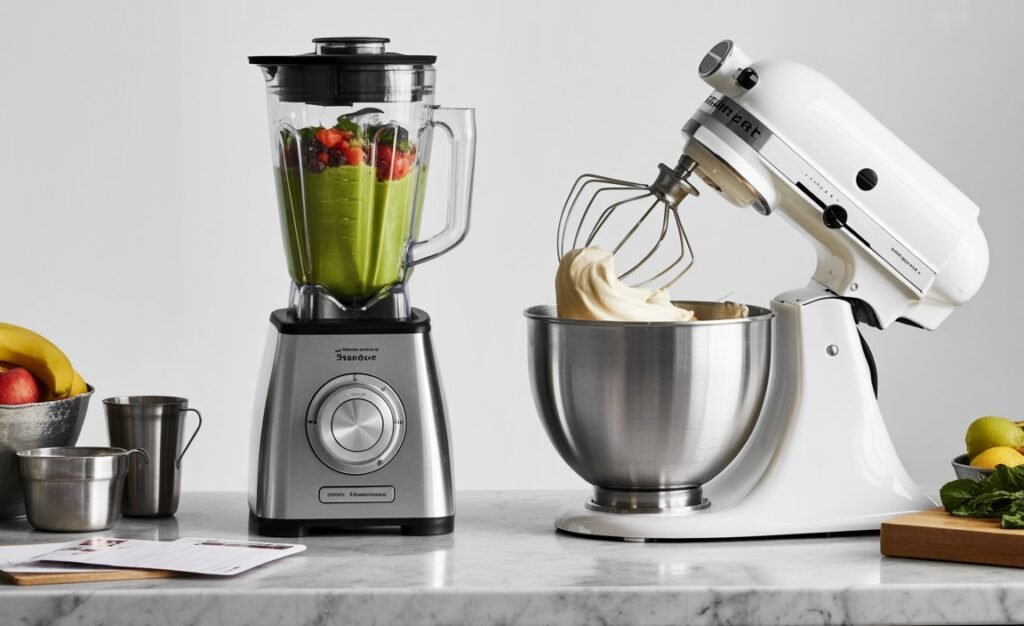
Blenders and Mixers: Complete Buying Guide for Everyday Kitchen Use
Blenders and mixers are among the most essential kitchen appliances, yet many people still confuse their roles. While both help with food preparation, they serve very different purposes and are designed for specific cooking tasks. Choosing the right appliance depends on what you cook, how often you prepare meals, and how much space you have available in your kitchen.
This complete guide explains the differences, use cases, features, and buying considerations so you can select the best appliance for your cooking habits and lifestyle.
Blender vs Mixer: What’s the Difference?
A blender is built to transform solid ingredients into smooth liquids or soft textures using high-speed rotating blades. It is commonly used for smoothies, soups, sauces, and crushing ice or frozen foods.
A mixer uses beaters, paddles, or whisks to combine ingredients rather than break them down. It is essential for baking, whipping cream, kneading dough, and preparing batter for cakes, pastries, and bread.
In simple terms:
- One appliance liquefies and purees food
- The other mixes and aerates ingredients
Understanding this difference helps avoid buying the wrong tool for your needs.
Typical Uses in the Kitchen
Common uses for blending appliances
- Preparing smoothies and protein shakes
- Making creamy soups and vegetable purees
- Crushing ice and frozen fruit
- Preparing sauces and dressings
- Creating baby food and soft meals
Common uses for mixing appliances
- Preparing cake batter and pastry dough
- Whipping cream and egg whites
- Mixing cookies, muffins, and bread recipes
- Kneading dough for pizza or bread
- Preparing frosting and dessert mixtures
Both tools are valuable, but each excels in different cooking scenarios.
Types of Blending Appliances
Understanding the available categories makes it easier to choose the right model.
Countertop Models
These are the most common and powerful options. They include a large jar and strong motor capable of handling ice, frozen foods, and tough ingredients.
Best for:
- Families
- Frequent cooking
- Smoothies, soups, and sauces
Personal Models
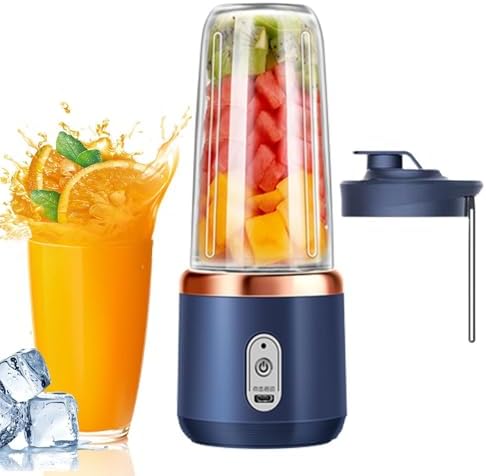
Compact and convenient units designed for single servings and quick preparation.
Best for:
- Small kitchens
- Busy lifestyles
- Smoothies and quick drinks
Immersion (Hand) Models
Handheld tools used directly in pots or bowls. Ideal for soups and quick blending tasks.
Best for:
- Soups and sauces
- Small portions
- Easy storage
Types of Mixing Appliances
Mixing equipment comes in two primary forms, each suited to different levels of cooking.
Hand Mixers
Lightweight and portable. Perfect for basic mixing tasks such as cake batter or whipping cream.
Best for:
- Beginners
- Occasional baking
- Small kitchens
Stand Mixers
Heavy-duty machines designed for regular baking and dough preparation. They often include attachments for kneading, whisking, and mixing.
Best for:
- Frequent bakers
- Bread and pastry preparation
- Large batches
Key Factors to Consider Before Buying


1) Your Cooking Style
Your cooking habits should guide your purchase.
If your meals involve smoothies, soups, and sauces, choose a blending device.
If you bake often or prepare dough and desserts, a mixing machine is more suitable.
2) Power and Performance
Motor strength determines how efficiently the appliance handles ingredients.
- Higher wattage improves performance with hard foods
- Strong motors handle nuts, frozen fruit, and thick dough
- Lower power suits light tasks and occasional use
3) Capacity
Size matters when preparing meals for different household sizes.
- Large families benefit from bigger bowls or jars
- Individuals may prefer compact options
- Batch cooking requires higher capacity
4) Kitchen Space
Storage availability influences the type you choose.
- Countertop appliances need dedicated space
- Handheld versions are easier to store
- Compact models suit small kitchens
5) Budget vs Premium Options
Entry-level appliances are ideal for occasional use.
Premium models offer:
- Stronger motors
- Better durability
- More attachments
- Improved performance
Investing in quality often saves money over time.
Features That Improve Performance
Modern food-prep appliances include features designed to enhance convenience and efficiency.
Variable Speed Controls
Allow better control over texture and consistency.
Pulse Function
Helps process ingredients in short bursts for precise results.
Attachments
Stand units often include:
- Dough hooks
- Whisks
- Paddles
These increase versatility.
Safety Features
Look for:
- Non-slip bases
- Overheat protection
- Secure locking lids
Cleaning and Maintenance
Ease of cleaning is essential for everyday use.
Important considerations:
- Dishwasher-safe parts
- Removable blades or beaters
- Smooth surfaces
- Minimal crevices where food can collect
Regular maintenance improves durability and hygiene.
Durability and Build Quality
Long-lasting kitchen equipment uses:
- High-quality plastic or glass jars
- Stainless steel components
- Strong motor construction
Checking user reviews helps identify reliable models.
When You May Need Both Appliances
Many households eventually benefit from owning both tools.
A blending unit supports:
- Drinks
- Sauces
- Soups
A mixing device supports:
- Baking
- Dough preparation
- Desserts
Together, they cover most food preparation tasks.
Benefits for Everyday Cooking
Time Savings
Preparation becomes faster and more efficient.
Better Food Quality
Textures improve, and consistency becomes easier to achieve.
Healthier Meals
Home cooking encourages better ingredient control.
Convenience
Meal preparation becomes easier and more enjoyable.
Common Buying Mistakes to Avoid
Many buyers make similar errors:
- Choosing based only on price
- Ignoring power and performance
- Buying oversized models for small kitchens
- Paying for features they never use
- Not considering cleaning requirements
Evaluating your needs helps prevent regret.
Final Thoughts
Blenders and mixers are not competitors—they are complementary tools that serve different roles in the kitchen. Understanding their functions makes it easier to select the right appliance for your cooking style and daily routine.
The best choice depends on how often you cook, what meals you prepare, and how much space you have available. Investing in the right equipment can save time, improve food quality, and make meal preparation more enjoyable.
Whether you’re preparing smoothies, baking bread, or experimenting with new recipes, the right appliance helps you work more efficiently and achieve better results. Over time, it becomes an essential part of your kitchen routine and supports healthier, more convenient cooking every day.yable.

[…] Blenders, food processors, and coffee makers perform better when cleaned regularly. Residue buildup can affect taste and functionality. […]
[…] Blenders are better for liquids and smoothies […]